 LASSO - Laboratory of Space Systems and Optomechanics
LASSO - Laboratory of Space Systems and Optomechanics
LASSO - Laboratory of Space Systems and OptomechanicsThe Laser Interferometer Space Antenna (LISA) is a mission led by ESA, in collaboration with NASA and an international consortium of scientists, to create a large-scale space-based gravitational wave observatory that consists of a constellation of three spacecraft, each separated by 2.5 million kilometers to form an equilateral triangle in their formation.
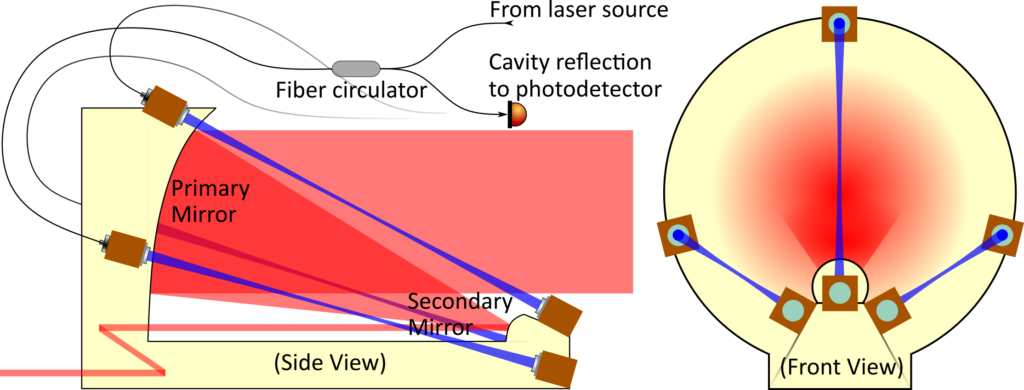
Using Pound–Drever–Hall (PDH) frequency locking, changes in cavity length produce changes in the frequency of the locked laser light. Monitoring these frequency variations effectively monitors length variations in the telescope structure. The frequency variations are measured using heterodyne detection, comparing the beat frequency between each cavity’s laser and a laser locked to a stable reference cavity.
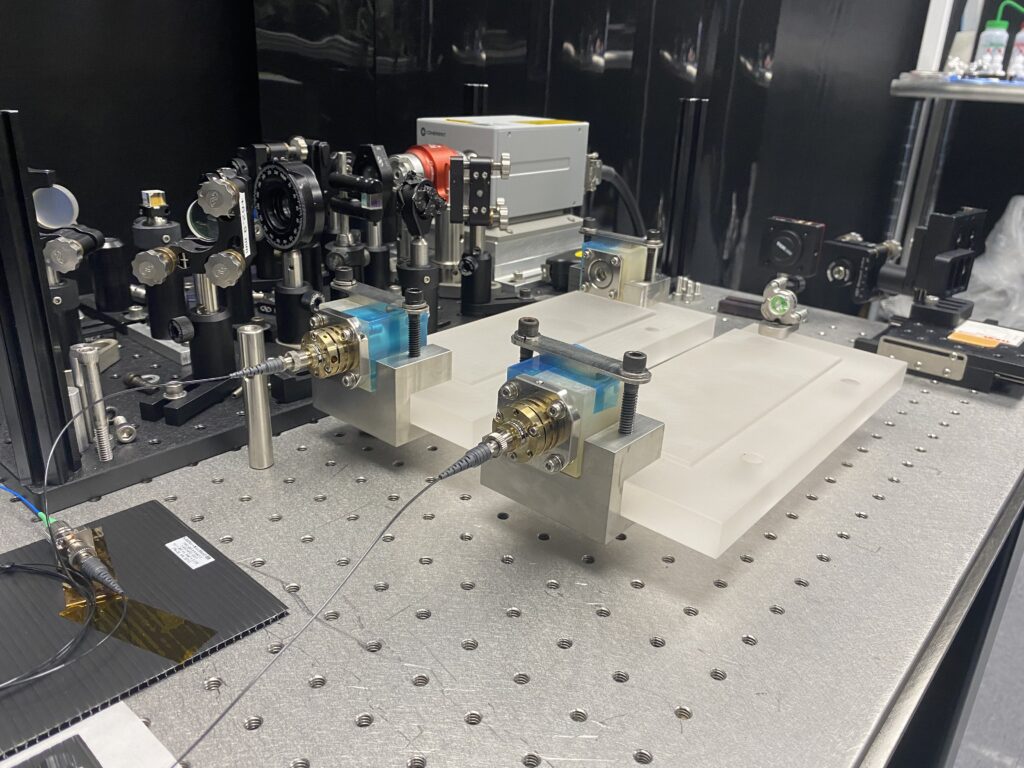
We have designed and developed first‑generation OTI prototype cavities, and current work focuses on testing their stability when mounted on ultra‑low‑expansion (ULE) glass plates and evaluated with various PDH‑based frequency stabilization methods.
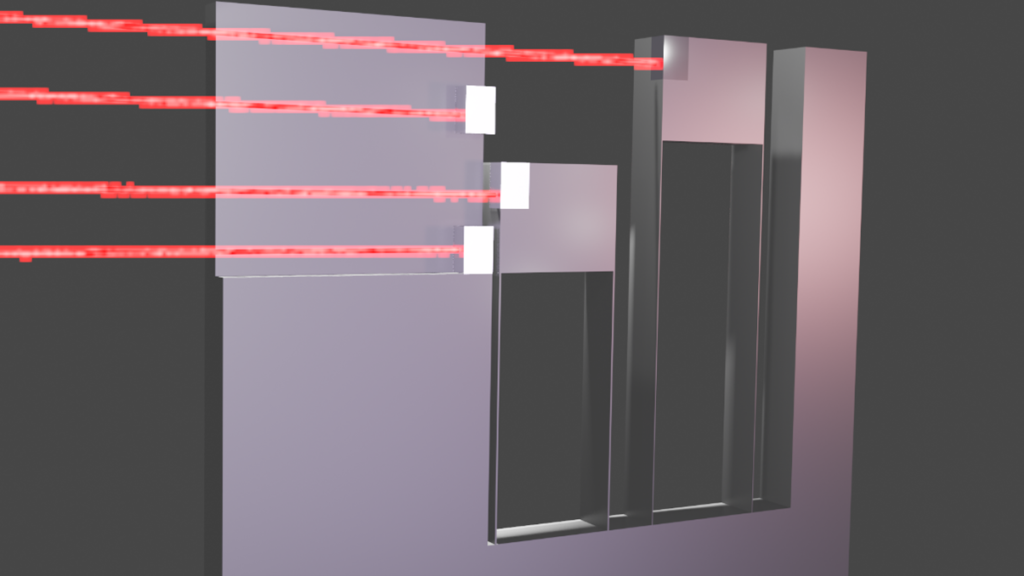
A rendering of the sensor being developed for use in LIGO shows two fused silica resonators, each with a different resonance to increase the sensor’s bandwidth. The acceleration of each resonator is measured by observing the phase difference between two beams of light: one reflected off a mirror on the test mass and one reflected off a mirror on the frame of the sensor.
Gravimetry is vital for operations in the Laser Interferometer Gravitational-wave Observatory (LIGO) project. To detect gravitational waves, LIGO’s interferometers must track the position of a test mass with an accuracy of 10⁻¹⁹ m. Vibrations from outside the interferometer (such as seismic activity or cars driving along the road) create noise that prevents LIGO from reaching this displacement sensitivity.
Gravimeters allow these outside vibrations to be detected and removed from the LIGO systems through active feedback, enabling researchers to achieve the required sensitivity. However, the gravimeters used by LIGO often have drawbacks, including being large, expensive, and incompatible with vacuum or cryogenic temperatures.
Our Work
LASSO is trying to develop a gravimeter that avoids these drawbacks while maintaining competitive acceleration sensitivity.
As shown in the figure, the sensor envisioned for LIGO uses two optomechanical resonators with different frequencies. These resonators are projected to have acceleration noise floors competitive with the accelerometers already used by LIGO, and using two resonators increases the bandwidth of the sensor to meet LIGO’s requirements.