

About Us
Quantum Sensing and Searches for New Physics
Welcome to our lab webpage!
Our lab employs quantum metrology and quantum sensing with atomic and molecular systems to probe fundamental physics and to explore the world around us with high precision.
We develop cutting-edge experimental techniques to implement precise control of quantum systems, in particular atoms and molecules cooled to less than a millionth of a degree above absolute zero. Placing these quantum objects in superpositions of spatial or momentum states results in quantum interferometers that are exceedingly sensitive to undiscovered physics and the environment. We envision new applications such as measuring fundamental constants, probing for deviations from Newtonian gravity, looking for dark matter or dark energy, and searching for other physics beyond the Standard Model.
In parallel, we are working on miniaturizing and optimizing the robustness of these techniques with the goal of building quantum-based sensors in compact packages. These devices could be used for exciting applications in the field, such as gravimetry, inertial sensing, gravitationally assisted navigation, or studying geology and geophysics.
Latest News and Lab Stories
- 14 July 2026 – Our paper describing the new Cesium MOT is now on the arXiv. It turns out that using diverging laser beams and modular, compact, robust optics improve stability in atom numbers and spatial distribution. Congrats to all authors!
- June 2026 – Coherence keeps on improving and we now see atom interferometer fringes after holding our atoms in the optical lattice for up to 4 seconds. This may be the longest coherence times in an experiment that did not filter their optical lattice laser beam using a filter cavity. How far can we go?
- 21 May 2026 – It’s been an exciting time in the lab. We have now observed an atom interferometer fringe, which means that our atoms act like little quantum sensors that measure gravity. This is the first optical lattice atom interferometer in Arizona and the second—or third, depending on how you count—in the USA. We’re all looking toward optimizing our experimental systems and starting to perform new measurements using the apparatus.
-

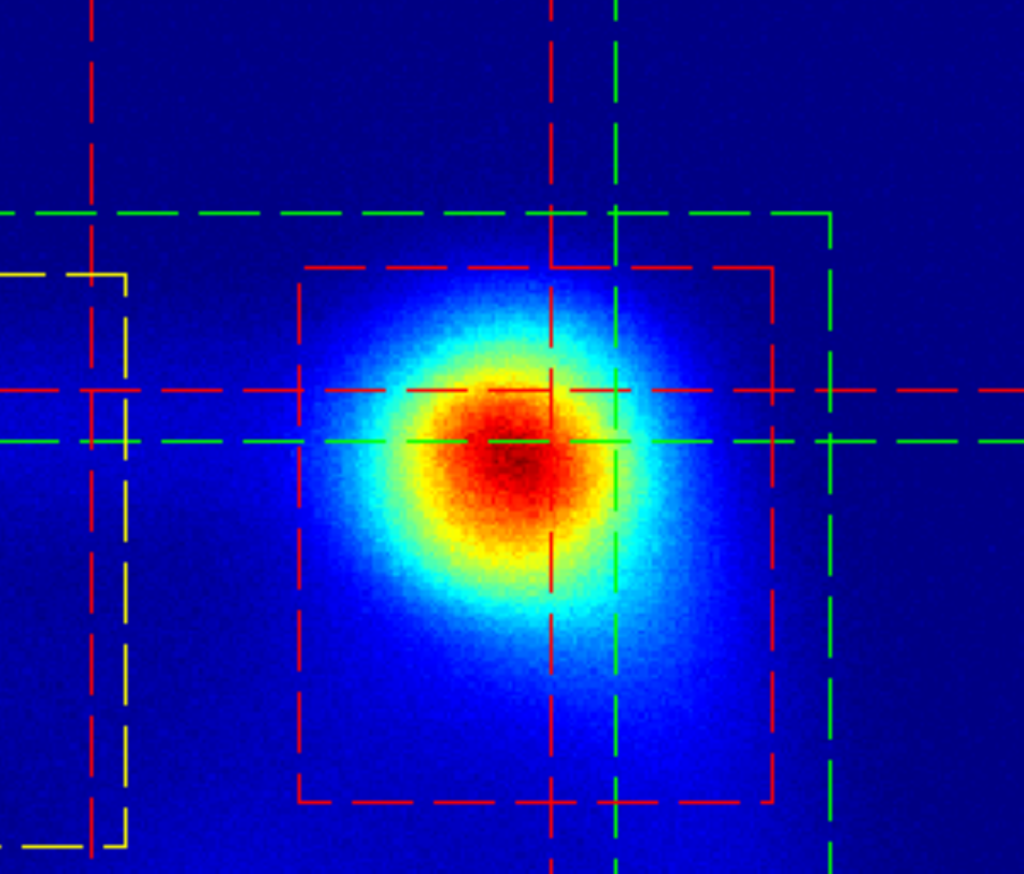
- April 2026 – Maximizing the amount of information captured by our atoms requires precisely controlling them at the level of a single quantum state. We use a carefully choreographed sequence of microwave, optical, and magnetic fields to achieve this level of quantum control. We now have approximately 10 million cesium atoms in the magnetically insensitive quantum state at a temperature of 400 nK. Note: the colorful boxes help us count the number of atoms in different regions of the fluorescence image.
-
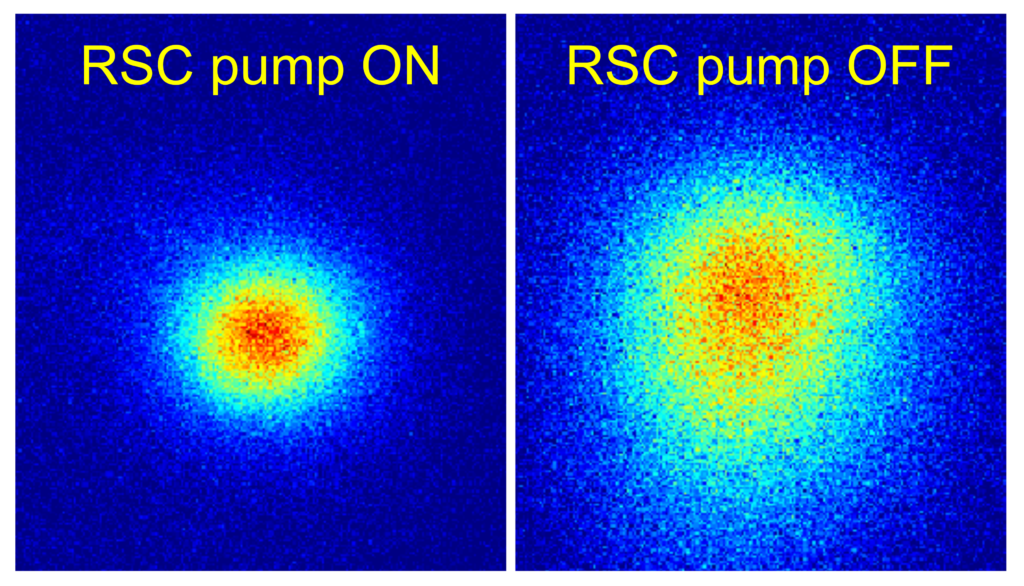
- February 2026 – After some rainstorms, the Arizona sun is warming the weather back up. Meanwhile, the atoms in our optical lattice atom interferometer are becoming colder still, now reaching temperatures below 1 µK, enabled by efficient Raman sideband cooling. The difference is clear when looking at the size of the atom sample after falling for a few tens of milliseconds: the colder atom sample expands much less than before cooling.
-
- January 2026 – Phillip is joining the lab as a first-year rotation student. Welcome, Phillip!
- December 2025 – The end of the year came with improvements to our experimental systems: we have second-generation in-vacuum heatpipes, developed in collaboration with Universal Cryogenics, a local Tucson company. Our thermal measurements show that performance is eight times better than before, beyond our expectations. We had estimated that we could achieve a sixfold improvement in Rev. Sci. Instrum. 96, 083201 (2025). We can now dissipate up to 200 W of thermal power inside the vacuum chamber while keeping the vacuum pressure below 10−10 torr!
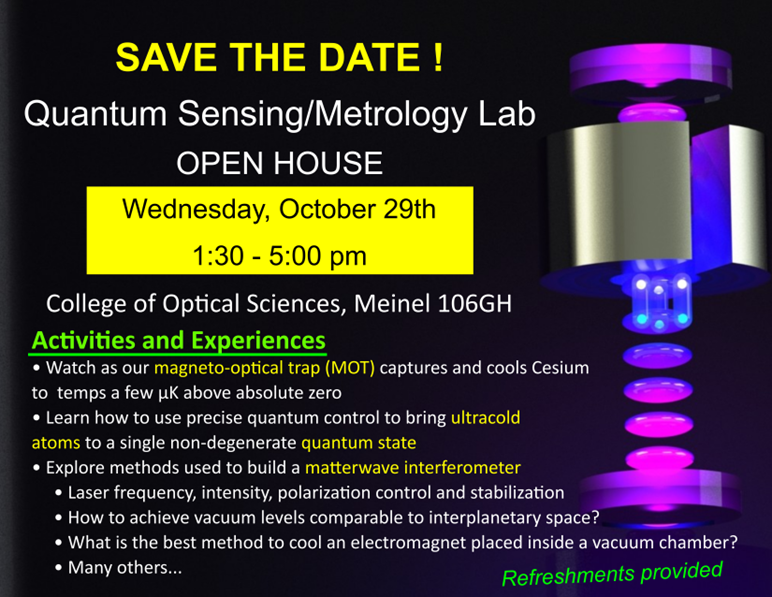
- October 29, 2025 – We just had our open house on the one-year anniversary of the lab at the University of Arizona. Thank you to members of the College of Optics, Physics, Engineering, and many others for visiting our lab and chatting about our research.
-
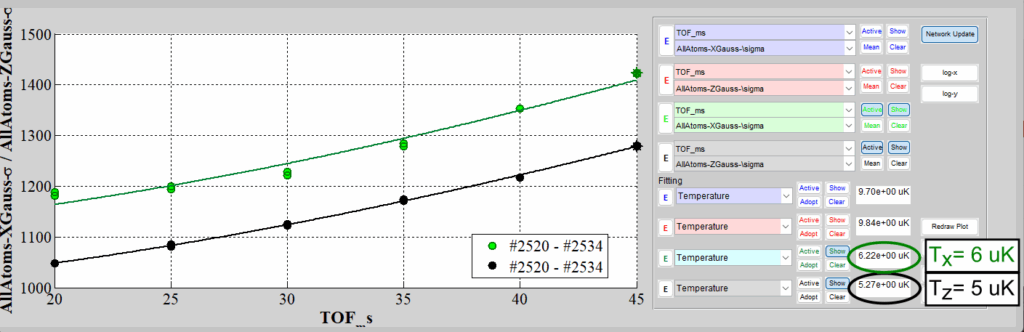
- September 2025 – Cesium atoms in our lab keep getting colder! Cancelling out Earth’s magnetic field allows polarization-gradient-cooling processes to reduce our sample temperature to below 10 µK. We extract temperatures using a camera to measure the size of the atom sample along two axes, x and z, as the atoms fall. Time of flight in milliseconds is shown on the horizontal axis.
-
- August 21, 2025 – Our manuscript describing an in-vacuum electromagnet that uses heatpipes for cooling is now published in the Review of Scientific Instruments. This is another important technical step toward our goal of achieving increasingly precise quantum control.
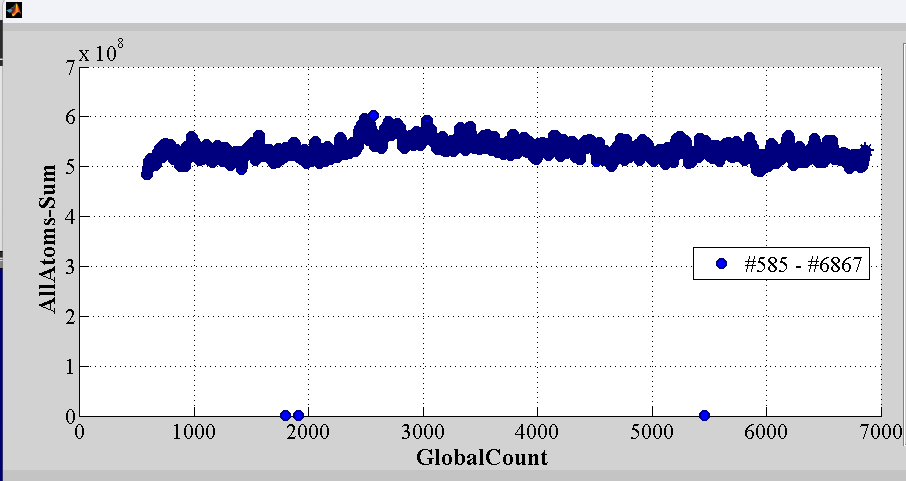
- July 2025 – We have recently implemented a control system that lets us precisely optimize the parameters used in the quantum control of our atoms. With this system, we are able to optimize polarization-gradient cooling to achieve atomic temperatures of a few microkelvin and tune our MOT for stable operation with less than 5% variation in atom number over more than 12 hours.
-
- June 2025 – Many congratulations to Paola for winning the 2025 NSF Graduate Research Fellowship. See the associated University of Arizona article to read about her journey through graduate school so far.
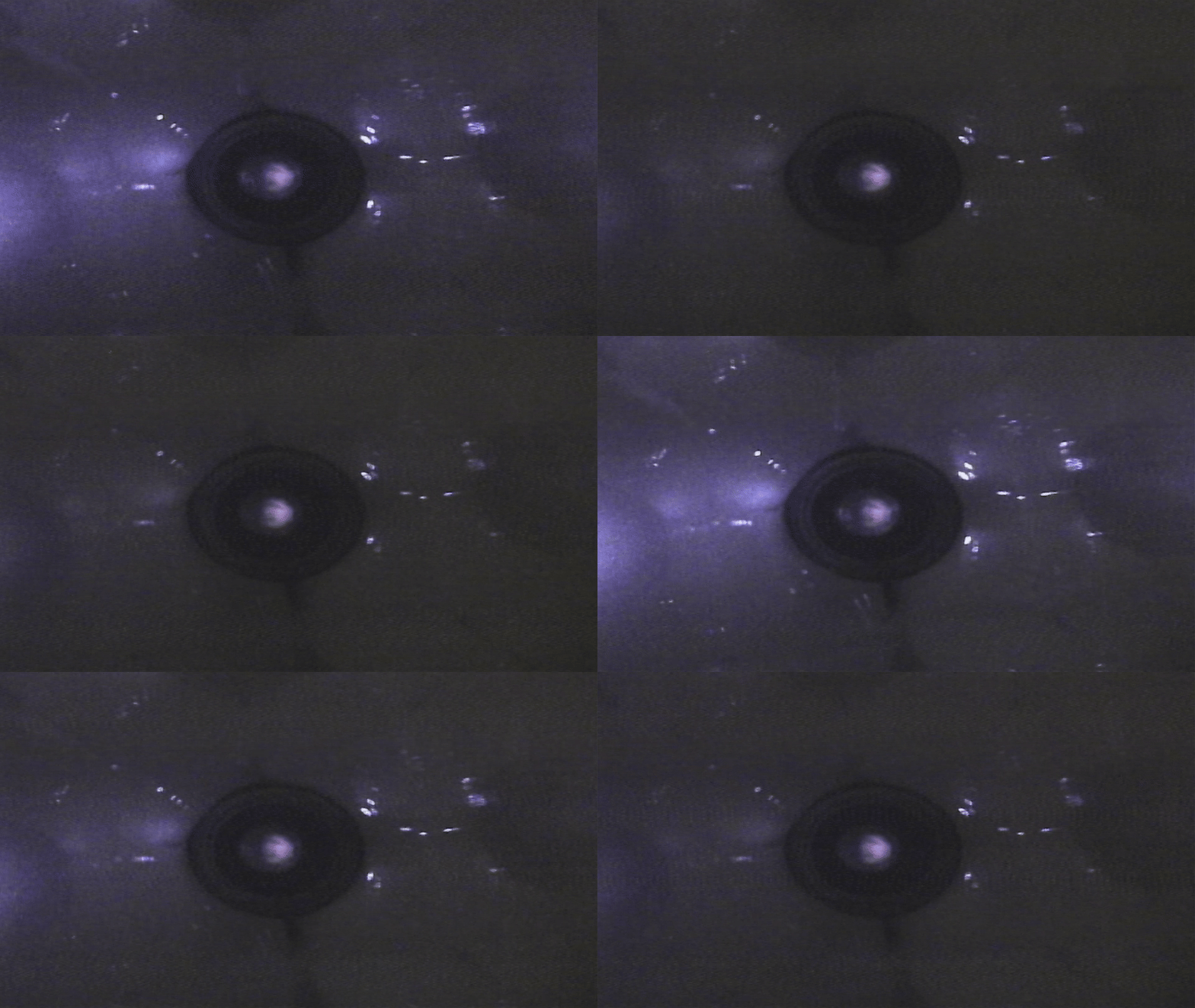
- May 14, 2025 – With summer fast approaching, the Arizona weather is getting hotter and the atoms in our lab are getting colder. The video below shows our first magneto-optical trap, or MOT. Cesium atoms are laser-cooled to a temperature of a few tens of microkelvin above absolute zero and loaded into the MOT over a few seconds.
-
- April 2025 – Our first lab publication is now available on the arXiv! It describes the technical implementation of an electromagnet housed inside our ultra-high-vacuum chamber that is passively cooled using heatpipes. We will soon use it to cool and confine atoms in a magneto-optical trap and levitate the atoms during sub-recoil cooling.
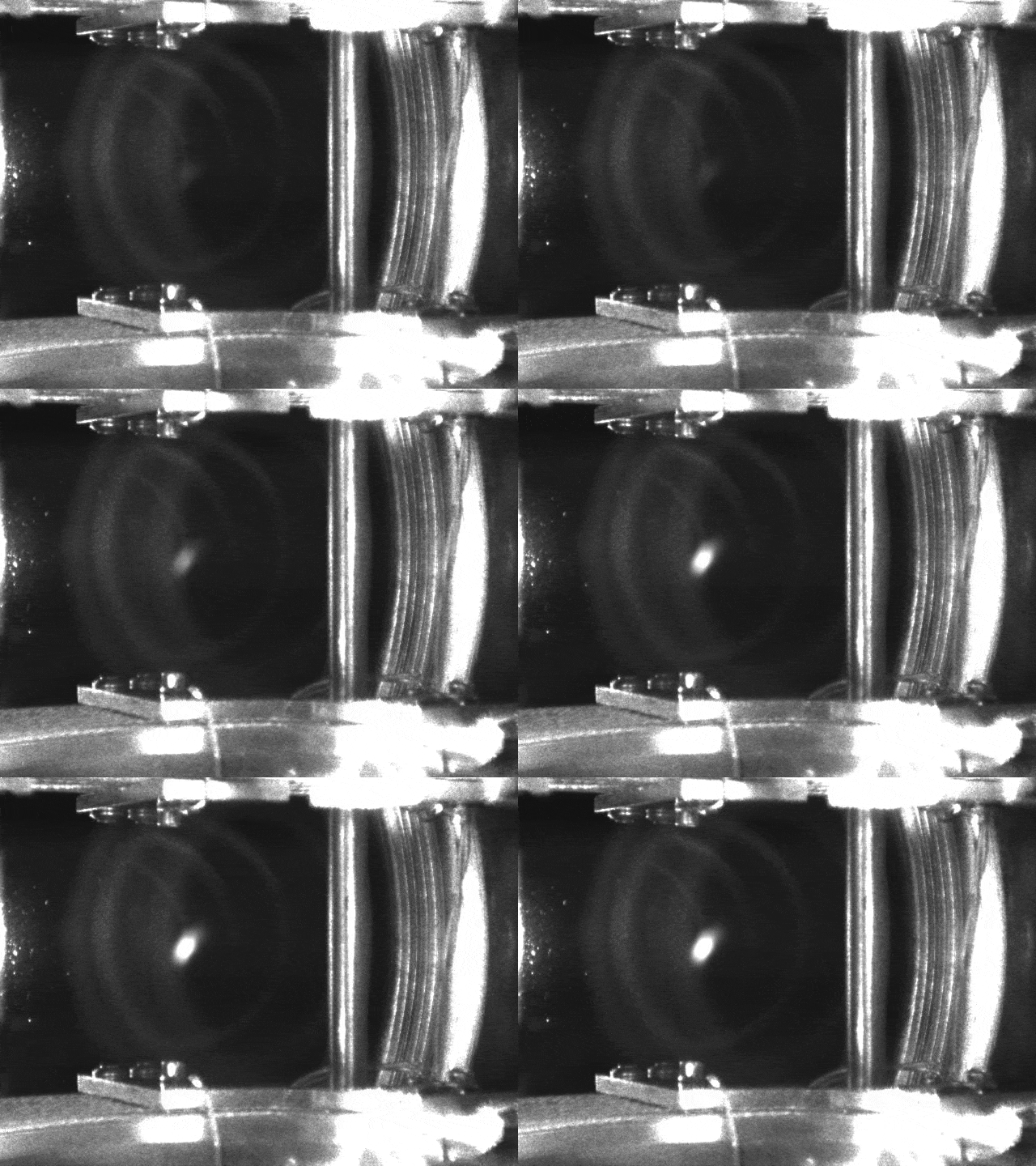
- April 2025 – Lights on! We’ve observed our first fluorescence in the vacuum chamber while scanning the laser across the cesium D2 line. The atoms respond as we tune the laser on and off resonance.
-
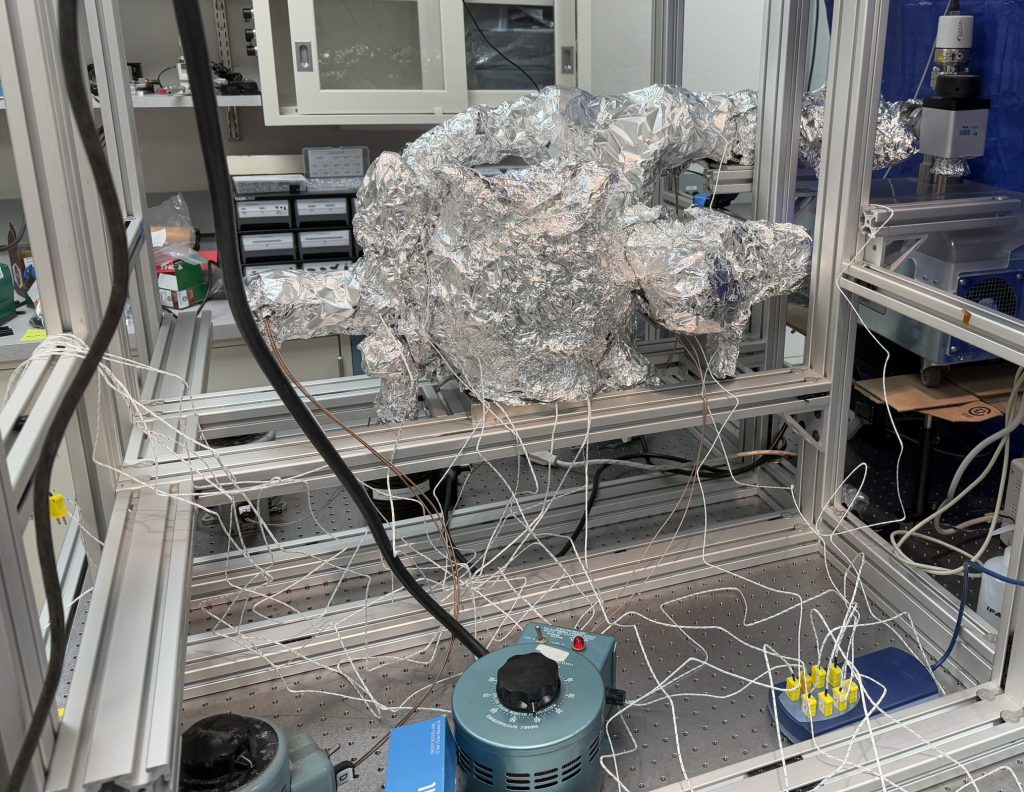
- February 2025 – Thanksgiving came early! The “turkey” vacuum chamber is ready to bake.
-
- January 2025 – Two more additions to our People page , as Scarlett and Stone join the team. Welcome!
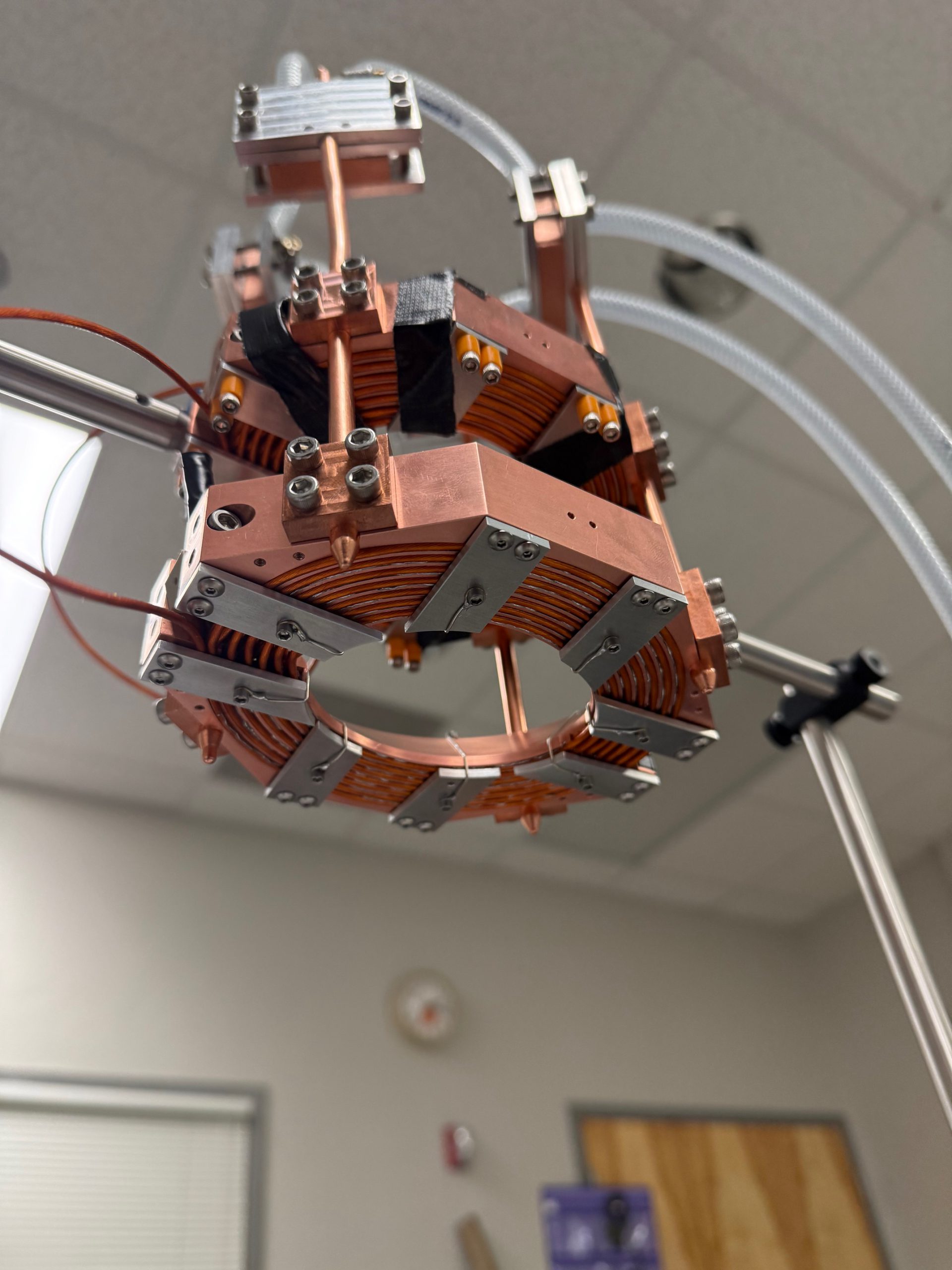
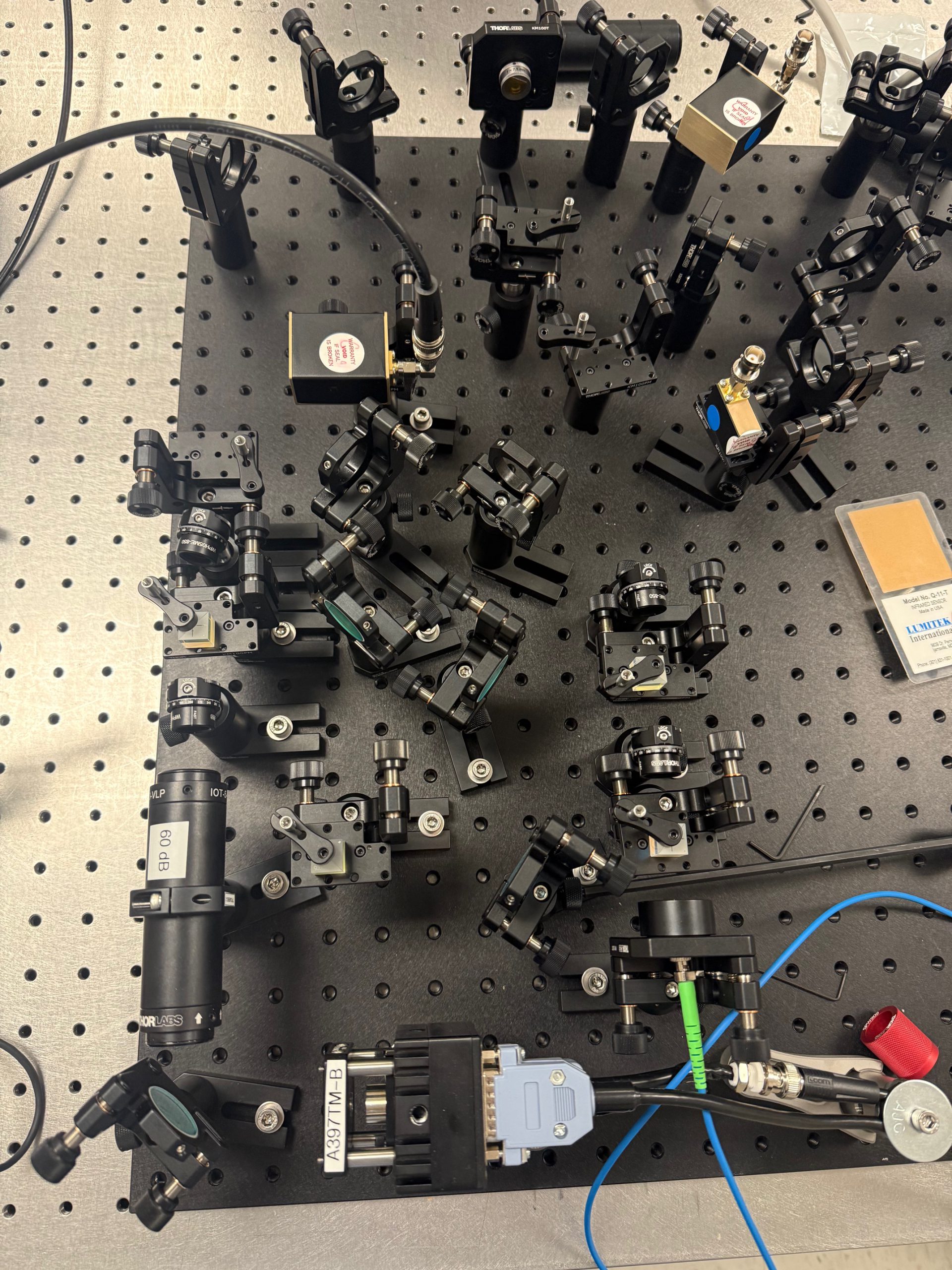
- December 2024 – The first few experimental setups are coming online. Take a look at our prototypes of the in-vacuum electromagnet for evaporative cooling and the MOT laser-optics setup!
-
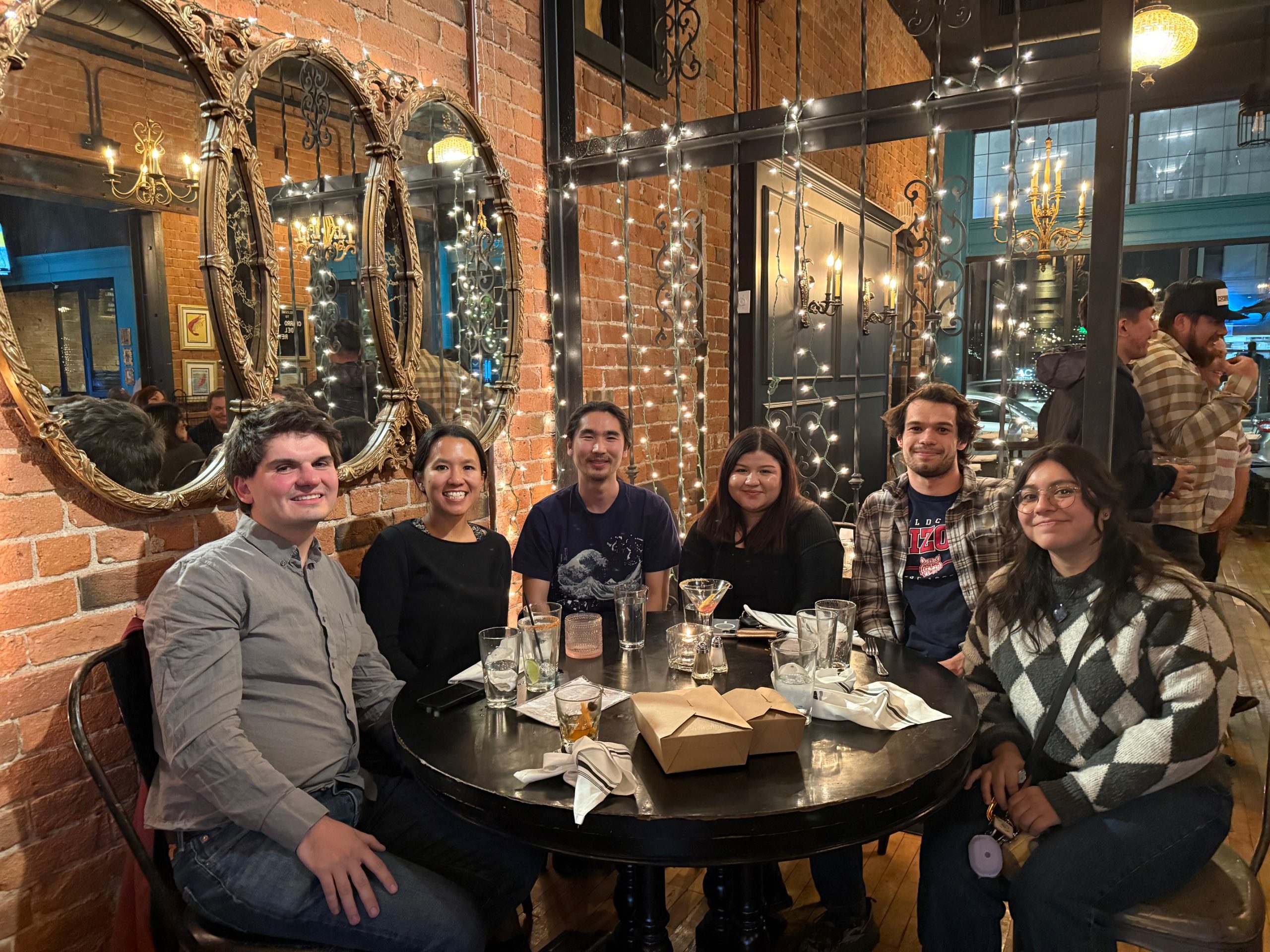
- December 13, 2024 – First lab outing, celebrating the end of the semester and the incoming holidays!
-
-
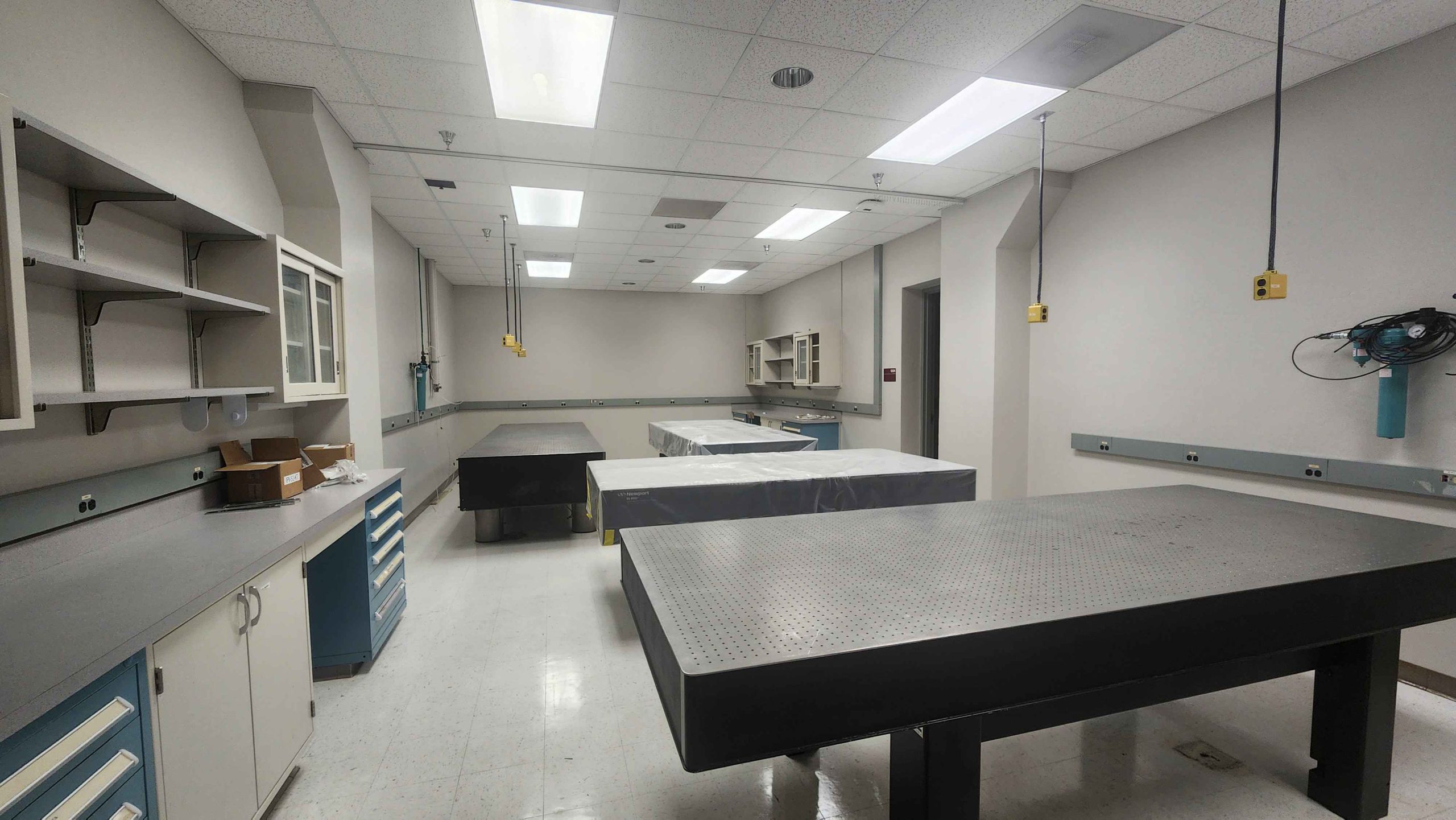
October 2024 – The lab space where we will conduct
our first experiments is ready, and the optical tables are installed.
-
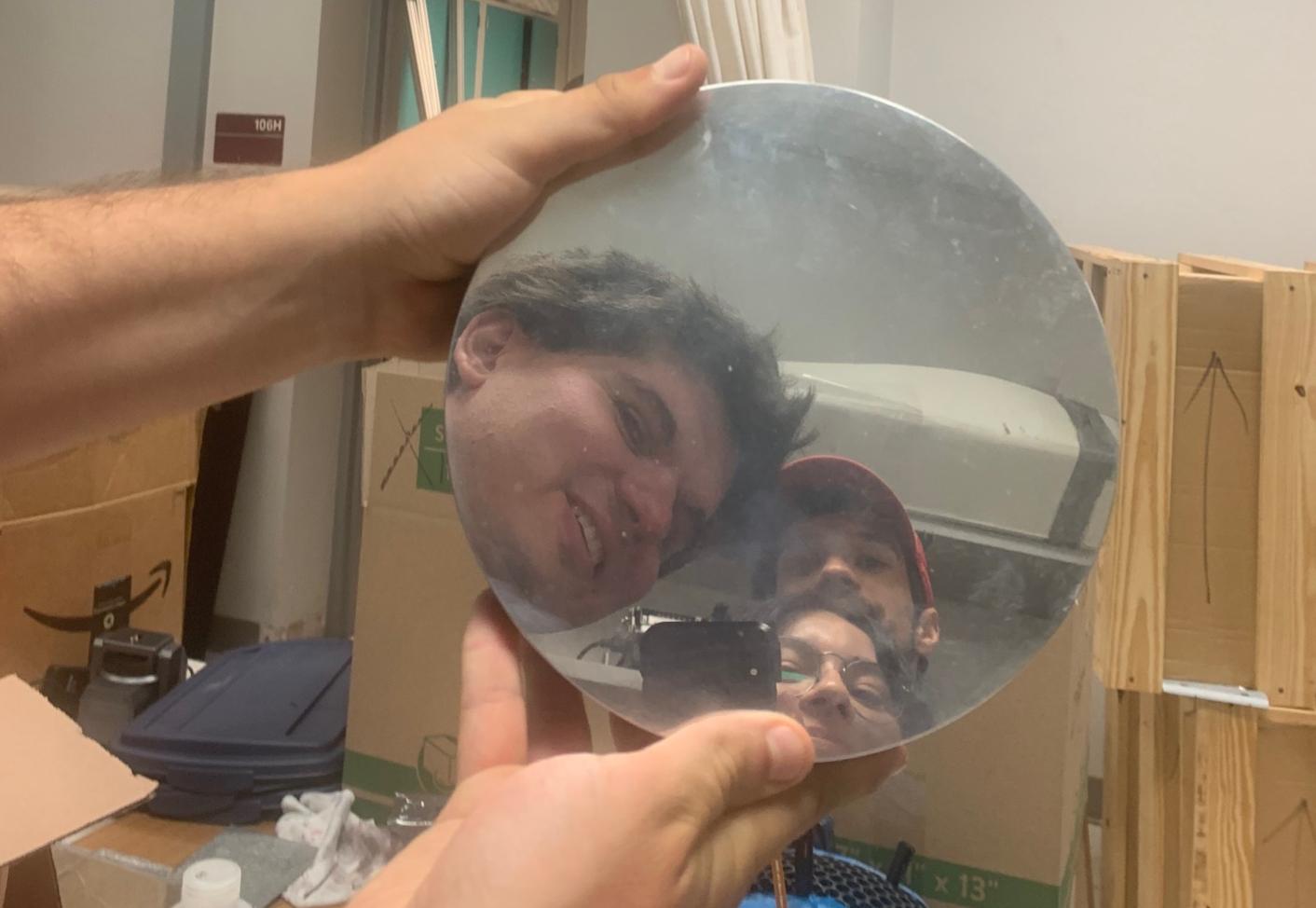
August 2024 – While checking out the new lab space,
we found hidden treasures!
- August 2024 – Happy to welcome Paola and Andrei as the first graduate students to join our research! You can read more about their research interests and passions outside the lab on our People page .
- July 14, 2024 – See below for some secondary reports on our two recent publications:
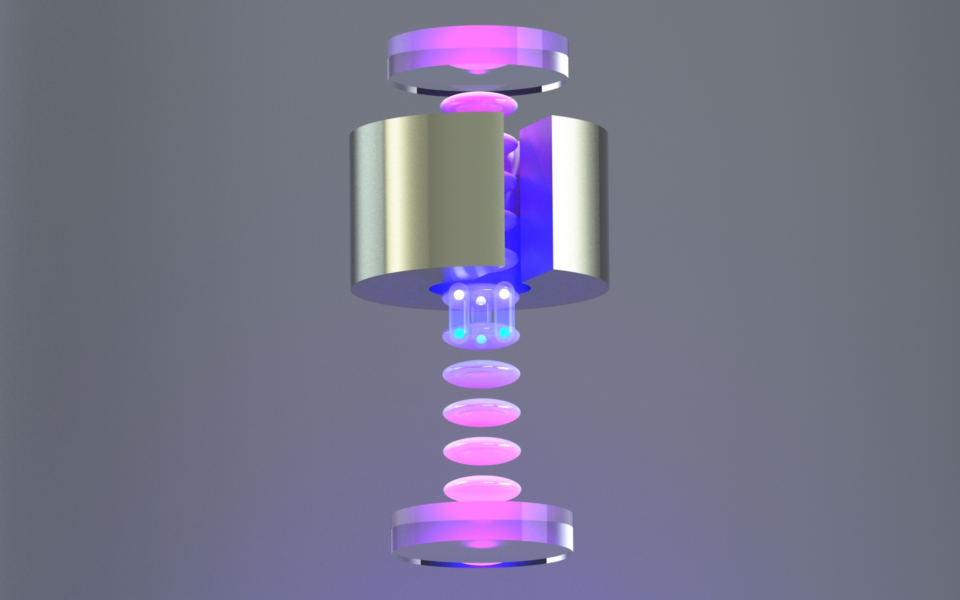
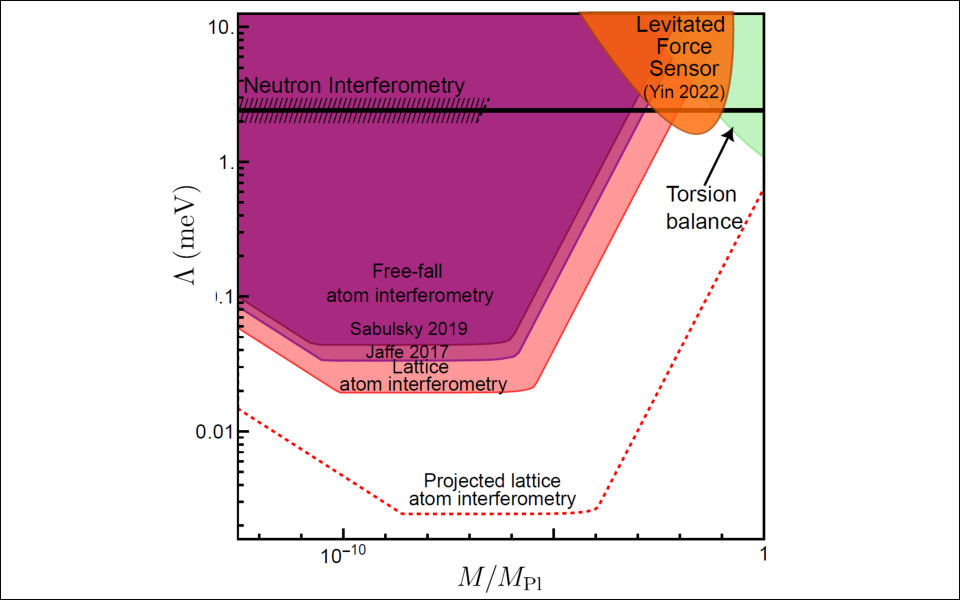
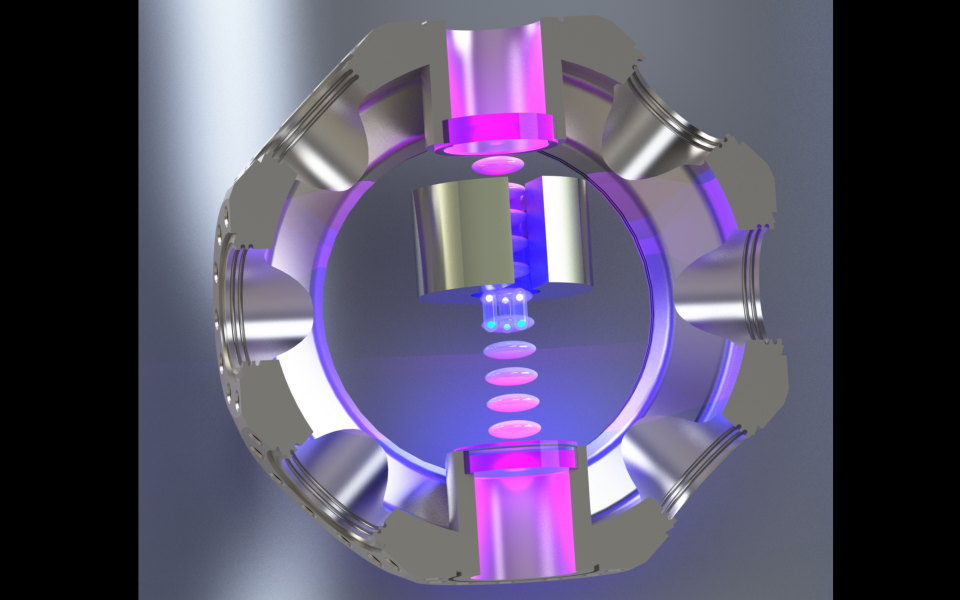
- June 26, 2024 – Our lattice atom interferometer measures the gravity of a centimeter-sized tungsten source mass more precisely than any other quantum sensor. The article is published in Nature and is also available on the arXiv !
- June 13, 2024 – We are very excited to have Ken Nakasone joining the group as a research assistant in Fall 2024. We expect to begin setting up our first experiments around the same time!
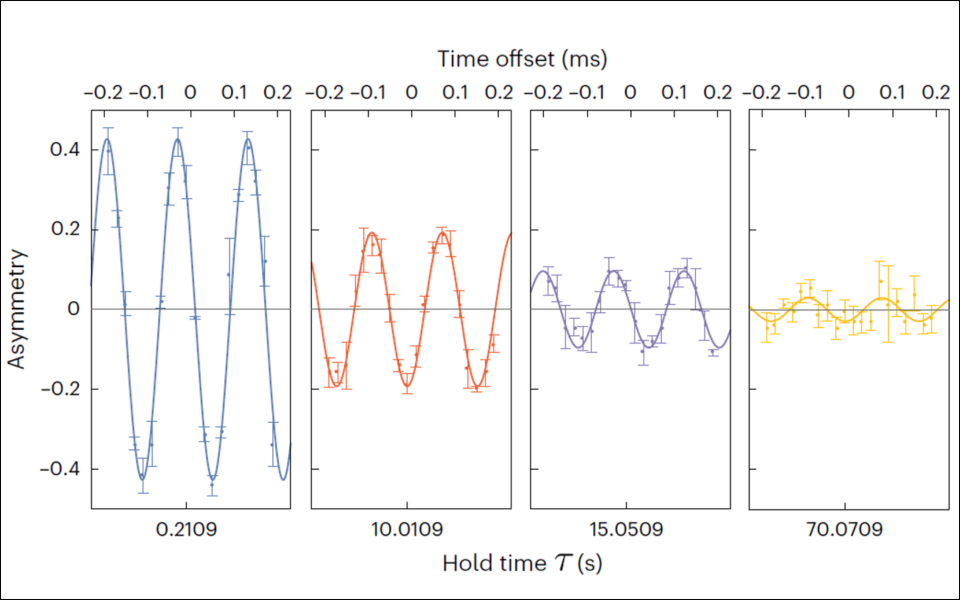
- June 11, 2024 – Our paper showing that the coherence of a quantum spatial superposition can be maintained even after measuring gravity for 70 seconds is now out !
- June 10, 2024 – Lab website is online!